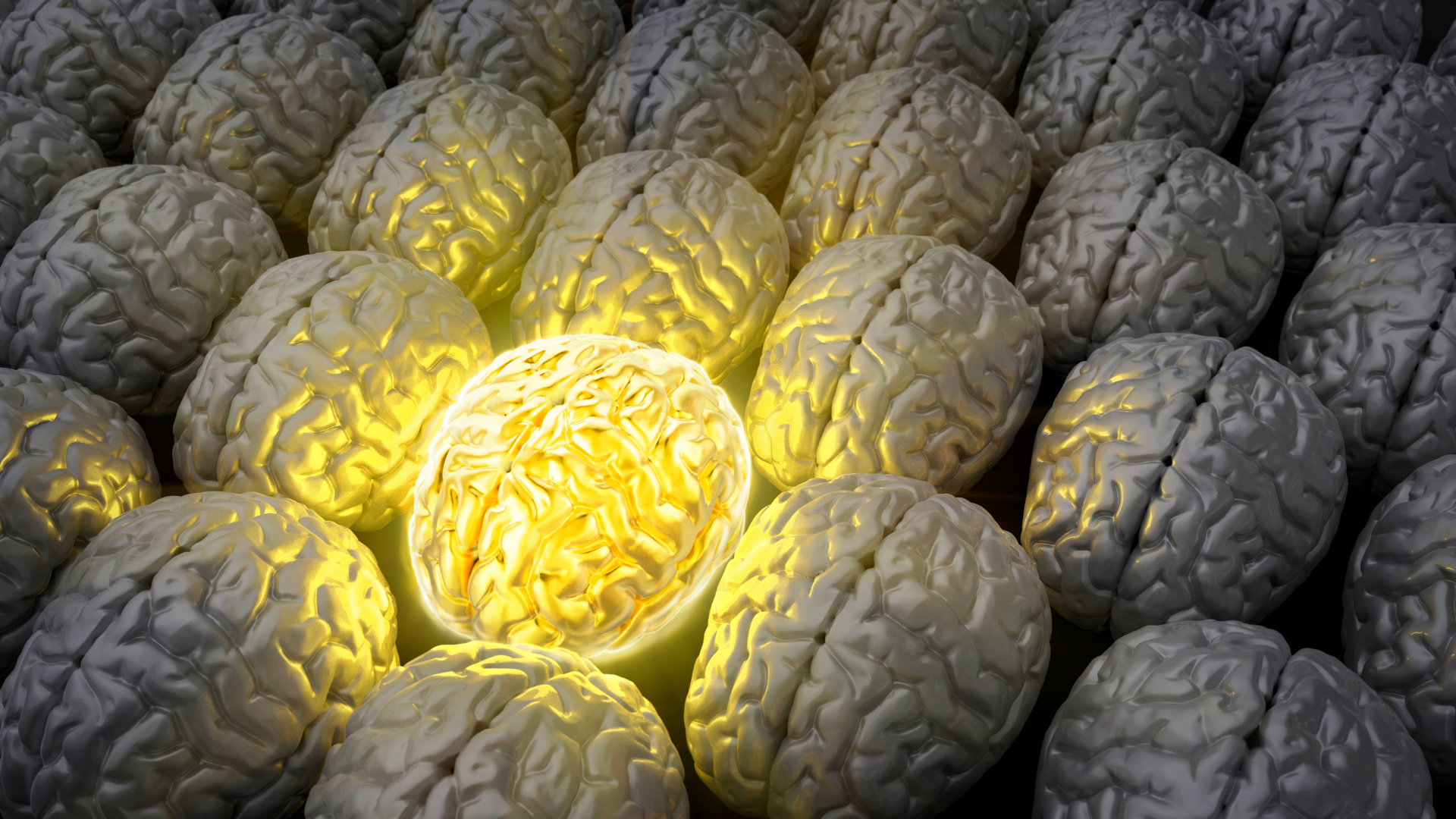
Five disciplines.
One integrated
method.
The inGeniusly method did not emerge from a single theory or a single field. It was built by drawing on five distinct bodies of research, each one addressing a different piece of the question of how human performance actually changes. Together, they form a framework that is more complete than any one discipline could produce alone.
-
The brain is not fixed at adulthood. Throughout life it reorganises itself - forming new connections, strengthening the pathways that are used regularly, and allowing underused ones to weaken. This is not a motivational idea. It is a biological fact with significant practical implications: cognitive skills can be developed at any age, and the brain of someone who trains deliberately will function differently from one that does not. Everything in the inGeniusly method is designed to trigger and sustain this process.
Further reading
Changes in grey matter induced by training - Draganski et al. · Nature · 2004
Landmark study proving that targeted skill training physically changes brain structure in adults — direct biological evidence that the brain responds to deliberate practice.
The aging mind: neuroplasticity in response to cognitive training - Park & Bischof · Dialogues in Clinical Neuroscience · 2013
Shows that cognitive training produces measurable neural changes across the entire lifespan — confirming that it is never too late to train the brain.
-
Generic training produces generic results because it assumes a generic brain. The research is clear that the same skill can present differently across individuals, shaped by working memory capacity, attentional style, processing speed, and a range of other variables. The Inner Genius Assessment was developed to map these differences precisely, so that every training programme starts from an accurate picture of how that specific brain works. The roadmap that follows is built for the individual, not for an average.
Further reading
A systematic literature review of personalised learning terms - Shemshack & Spector · Smart Learning Environments, Springer · 2020
Reviews decades of research showing that training built around each person's cognitive profile produces significantly better outcomes than standardised approaches.
-
Skills do not stick through motivation alone. Research in behavioural science shows consistently that lasting change requires habit formation: the building of reliable cue-routine-reward cycles that eventually make new behaviour automatic. The inGeniusly method incorporates this at every stage, helping clients and students build not just capability but identity: the sense of being someone who thinks and performs at a higher level. That shift, once established, sustains itself.
Further reading
How are habits formed: modelling habit formation in the real world - Lally et al. · European Journal of Social Psychology · 2010
The definitive study on real-world habit formation, showing that consistency and context matter far more than willpower, and that lasting behavioural change follows a predictable pattern.
-
How people learn matters as much as what they learn. Research in cognitive psychology has produced clear findings about the conditions under which skills are genuinely acquired, as opposed to temporarily absorbed. Deliberate practice, metacognition, spaced repetition, and an understanding of how working memory functions all inform how training sessions are structured and sequenced. The goal is not knowledge transfer. It is durable behavioural change.
Further reading
Improving students' learning with effective learning techniques - Dunlosky et al. · Psychological Science in the Public Interest · 2013
A comprehensive review identifying which learning strategies actually produce lasting results and why the most popular ones produce almost none.
On the promise of personalised learning for educational equity - Dumont & Ready · npj Science of Learning · 2023
Confirms that individual cognitive differences are the strongest predictor of learning outcomes and that personalised approaches consistently outperform standardised ones.
-
Neuroscience research on attention, memory consolidation, emotion regulation, and decision making is embedded directly into the exercises and training sequences used across all inGeniusly programmes. This is not neuroscience as a marketing term. It is the practical application of findings about how the brain encodes information, manages distraction, and performs under pressure, translated into tools that people can use in their actual work and life.
Further readingThe role of deliberate practice in the acquisition of expert performance - Ericsson, Krampe & Tesch-Römer · Psychological Review · 1993
The most cited study in skill acquisition research, establishing that expert performance is built through structured, purposeful practice with feedback, not innate talent.
The neurobiology of emotion–cognition interactions - Pessoa et al. · Frontiers in Human Neuroscience · 2015
Demonstrates that emotion and cognition are deeply interwoven. Stress and anxiety directly impair attention, working memory, and decision making in measurable ways.
KEY CONCEPTS ACROSS THE METHOD
The ideas that run through everything inGeniusly does.
Referenced across our all programmes: the concepts that connect the disciplines above into a single, coherent method.
Learning through .play
Why fun is a mechanism, not a feature
Learning through play at school: a framework for policy and practice
A review of 124 studies confirming that joyful, actively engaging, and iterative experiences produce deeper learning, the evidence behind why inGeniusly builds fun into every training session.
[Parker, Thomsen & Berry · Frontiers in Education · 2022]
Play and flow: harnessing flow through the power of play in adult learning
Shows that play-based approaches in adult learning trigger states of full cognitive immersion, associated with significantly better retention and performance than conventional training formats.
[Ong · Diversifying Learner Experience, Springer · 2020]
The 3A Mastery Loop
How skills move from conscious effort to automatic expertise
Learning strategies: a synthesis and conceptual model
Identifies which learning strategies are most effective at each stage of skill development, supporting why the 3A loop sequences understanding, practice, and personalisation in that specific order.
[Hattie & Donoghue · npj Science of Learning · 2016]
Knowledge tracing: modelling the acquisition of procedural knowledge
The foundational model explaining how skills move from conscious effort to automatic execution, the mechanism that the Adapt stage of the 3A loop is designed to accelerate.
[Corbett & Anderson · User Modeling and User-Adapted Interaction · 1994]
Deliberate practice and acquisition of expert performance
Describes the three types of mental representations that allow expert performers to plan, execute, and self-correct, the cognitive science behind the Acquire → Apply → Adapt progression.
[Ericsson · Academic Emergency Medicine · 2008]
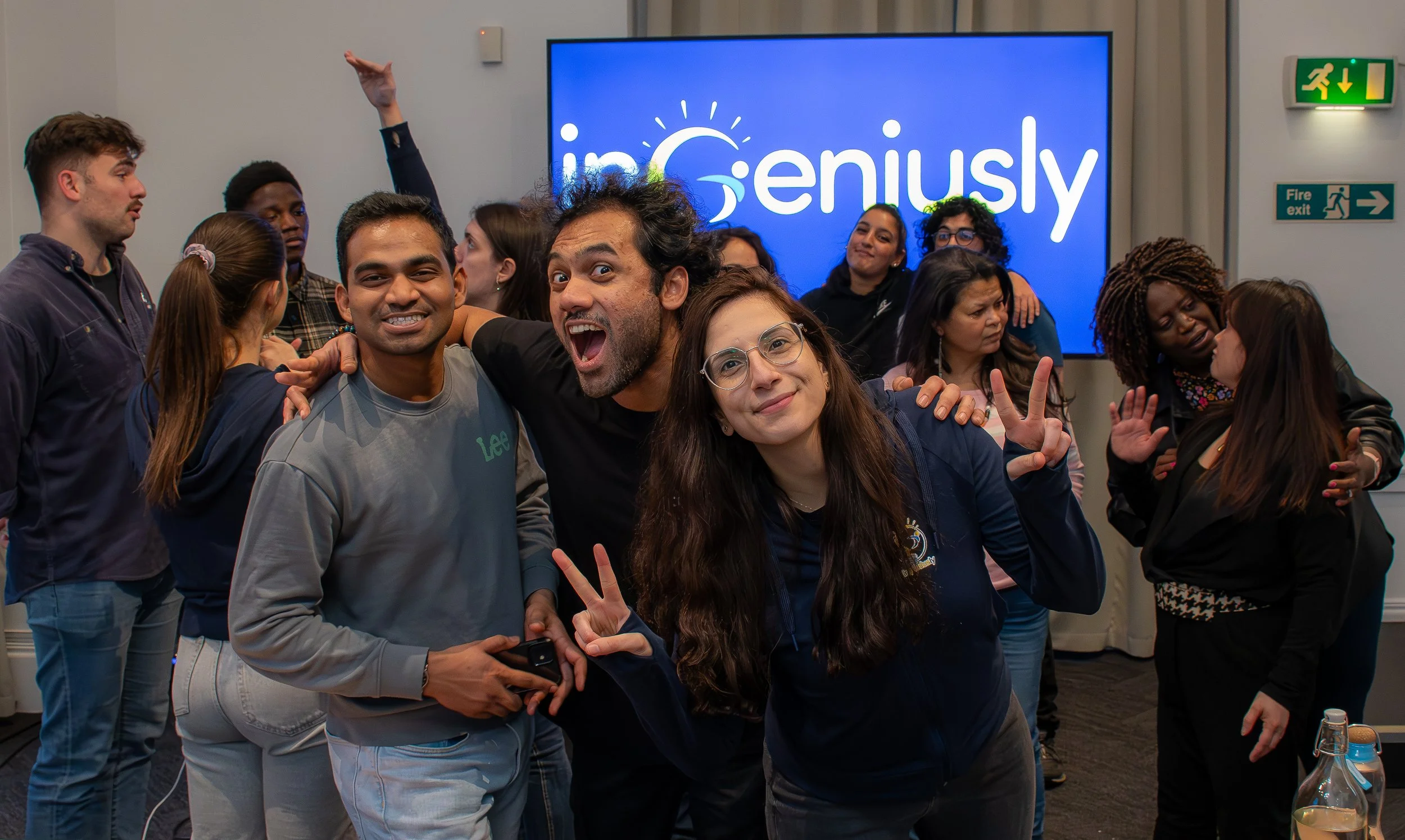
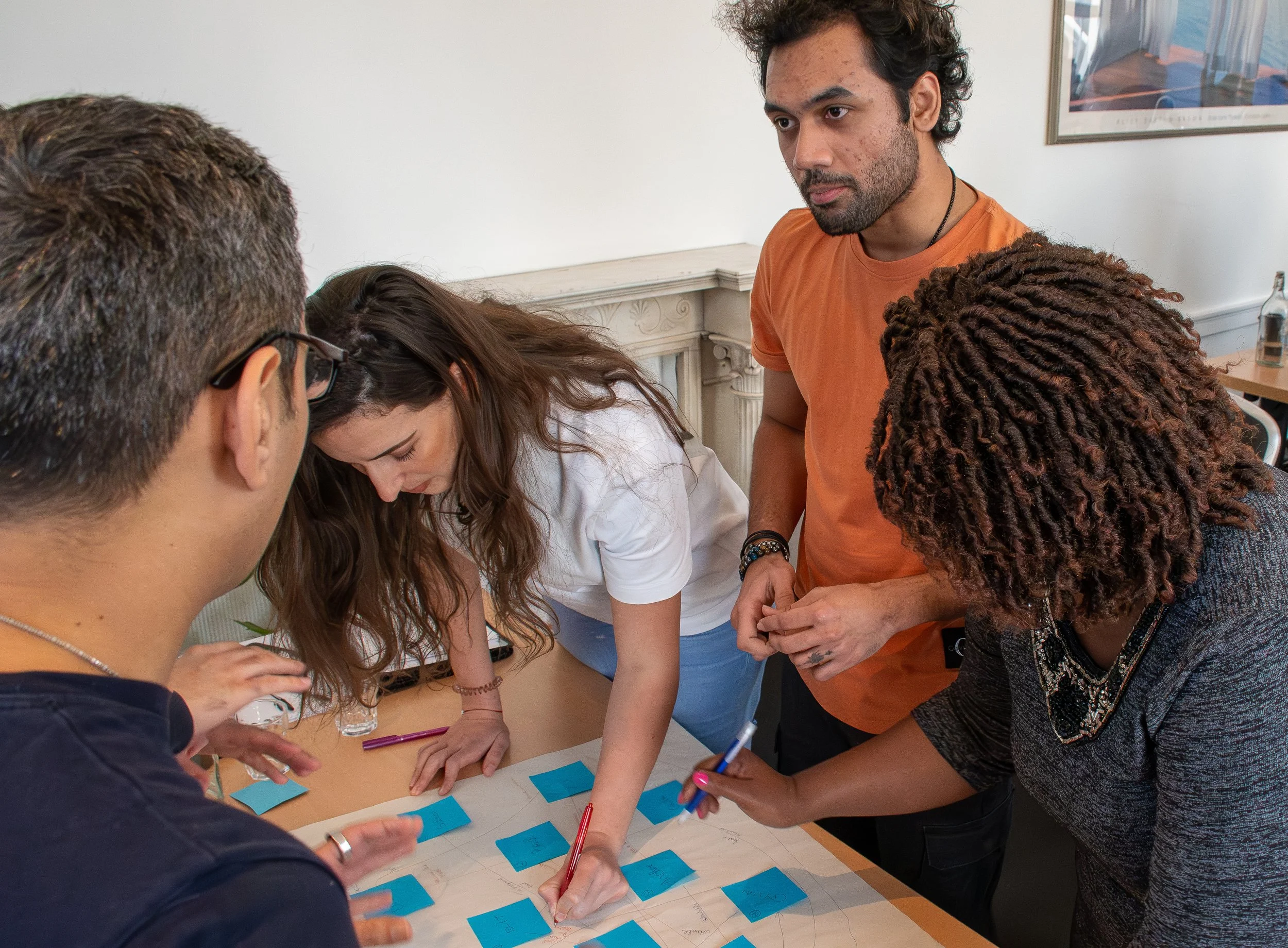
These five disciplines are not presented here as credentials. They are the explanation for why the method works when other training does not and why the results clients report are not temporary improvements that fade when the programme ends, but changes that compound over time.
Your brain is your
greatest asset.
Has anybody taught you how to rewire it?
The Inner Genius Assessment is where that starts.